This Alien Evidence Made Me Start Believing in Aliens | Joe Rogan

The debate over extraterrestrial intelligence has entered a remarkable new era as military encounters, government investigations, whistleblower testimony, and discoveries of distant planets continue to challenge what humanity thinks it knows about life in the universe. Conversations on the Joe Rogan Experience have repeatedly explored these mysteries, bringing together researchers, journalists, military witnesses, and former government officials who have examined some of the most controversial UFO cases ever reported.
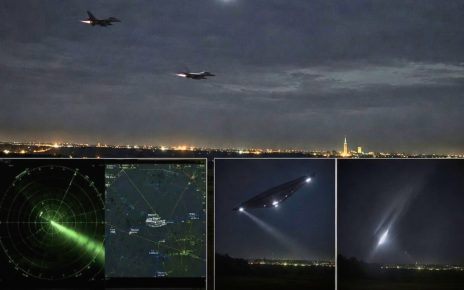
For many skeptics, one single photograph or strange story is unlikely to change their minds. What has become more intriguing is the growing collection of observations from different sources, including radar systems, infrared cameras, military pilots, and intelligence investigations. One of the best-known examples remains the 2004 “Tic Tac” encounter involving U.S. Navy personnel off the coast of Southern California. Witnesses described a smooth, white object without visible wings or conventional exhaust, while military sensors reportedly detected unusual activity.
Years later, officially released Navy videos commonly known as “FLIR1,” “Gimbal,” and “GoFast” brought unprecedented public attention to Unidentified Anomalous Phenomena (UAP). These recordings are genuine military footage, although that does not establish that the objects shown are extraterrestrial spacecraft. Some apparent anomalies can potentially result from viewing geometry, sensor behavior, distant aircraft, balloons, drones, or other conventional phenomena. The controversy became even more intense when former intelligence officials alleged that secret government programs had recovered unusual vehicles and even biological material described as “non-human.” Such claims have been discussed in congressional hearings and widely debated on podcasts, but the crucial physical evidence needed to scientifically confirm them has not been publicly produced and independently verified. The Pentagon’s All-domain Anomaly Resolution Office continues investigating UAP reports and historical allegations involving secret programs. AARO official website NASA has likewise encouraged rigorous scientific investigation while emphasizing that unexplained observations alone do not demonstrate an extraterrestrial origin. NASA’s UAP research Meanwhile, astronomy is providing a completely different reason to take the possibility of alien life seriously. Thousands of exoplanets have now been confirmed beyond our Solar System, including rocky worlds and planets orbiting within regions where temperatures could potentially permit liquid water. Powerful observatories can even analyze some planetary atmospheres for molecules that might eventually provide clues about biological processes. None of this proves intelligent extraterrestrials exist, but it has transformed the question from pure speculation into something scientists can investigate with real instruments and measurable evidence. The accompanying thumbnail, showing two stereotypical “Grey” aliens beside a futuristic glowing structure, should therefore be understood as illustrative artwork rather than authenticated evidence of extraterrestrial beings or technology. If undeniable evidence ever emerges, scientists would require far more than a dramatic image: physical materials would need to be independently examined, unusual technology would have to be demonstrated, or biological samples would need rigorous genetic and chemical analysis. Until then, skepticism and curiosity can coexist.
Perhaps the strongest reason to take the possibility of extraterrestrial life seriously is not any single viral UFO video, but the realization that our galaxy contains an extraordinary number of worlds—and humanity has only begun searching them for signs that someone else may be out there.