Dark Energy Is Over! James Webb Telescope Detects Something That Rewrites the Universe
The James Webb Space Telescope is giving astronomers an unprecedented view of the distant universe, and some of its observations are intensifying one of the biggest debates in modern cosmology: is our understanding of dark energy incomplete? Despite the dramatic claim that “dark energy is over,” scientists have not announced that dark energy has disappeared or that Webb has overturned the laws of physics.
Instead, Webb is providing extraordinarily precise observations of distant galaxies, exploding stars and cosmic distances that can be combined with measurements from other observatories to test the standard model of cosmology. Dark energy is the name scientists give to the mysterious phenomenon believed to be responsible for the accelerating expansion of the universe. It is estimated to account for roughly 70 percent of the cosmic energy budget, yet researchers still do not know what it actually is.
For decades, the simplest explanation has been a cosmological constant—a form of energy whose density remains unchanged as space expands. But recent observations have raised the provocative possibility that dark energy might change over cosmic time, a result that, if confirmed, could force physicists to rethink the universe’s past and future. One major source of this debate comes from the Dark Energy Spectroscopic Instrument, or DESI, which has constructed an enormous three-dimensional map of millions of galaxies and quasars.
When DESI measurements are combined with observations of the cosmic microwave background, supernovae and other astronomical data, researchers have found intriguing hints that dark energy may not behave exactly like a constant. DESI dark-energy research Webb is important to this story because it can independently investigate some of the measurements used to establish the cosmic distance scale. Astronomers have used Webb to observe Cepheid variable stars and other distance indicators in galaxies previously studied by the Hubble Space Telescope.
These measurements are particularly significant because of the long-running Hubble tension: observations of the nearby universe produce a somewhat faster expansion rate than predictions derived from measurements of the early universe under the standard cosmological model.
Webb observations have strengthened confidence that this disagreement cannot simply be dismissed as an obvious measurement error in Hubble’s Cepheid observations. NASA Webb and the Hubble tension If the tension survives increasingly precise observations, scientists may eventually need new physics to explain it, although researchers have not yet established what that physics would be—or whether it would directly involve dark energy.
Meanwhile, Webb’s discoveries of unexpectedly bright and rapidly developing galaxies in the early universe are providing additional tests of models describing how cosmic structures evolved.
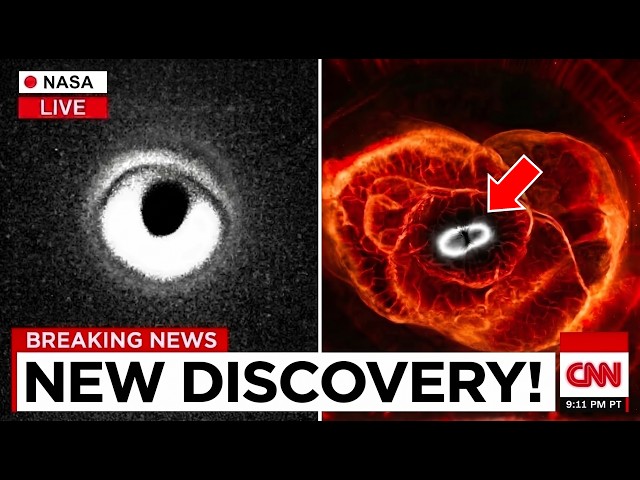
None of this means Webb has photographed dark energy itself. Dark energy does not appear as the glowing ring or fiery structure shown in the accompanying image, which should be regarded as an artistic, sensationalized visualization rather than an authentic
Webb observation. The genuine discovery is more subtle and potentially more consequential: several independent astronomical measurements are now testing whether the standard picture of an accelerating universe is complete.
Scientists will require substantially more data before declaring a revolution. But if future observations demonstrate that dark energy evolves with time, the consequences would be enormous, affecting theories about fundamental physics and even predictions for the ultimate fate of the cosmos.
Dark energy is not “over”—but for the first time in years, researchers have compelling reasons to ask whether the mysterious force shaping the universe is stranger than the simple explanation we have relied on for decades.