No One Alive Has Ever Seen This Happen to the Moon — And It Starts Next Week

Skywatchers are preparing for a striking lunar display next week as September’s Harvest Moon rises near the autumnal equinox, appearing unusually prominent above the eastern horizon for several consecutive evenings. The Moon will reach its full phase on September 26, 2026, but observers should be able to enjoy its nearly complete disk from September 25 through September 27, depending on their location and weather conditions. Despite sensational claims that “no one alive” has witnessed an event like this, astronomers emphasize that the Moon itself is not undergoing an unprecedented physical transformation. Harvest Moons occur regularly, receiving their name from the bright evening moonlight that historically gave farmers additional time to gather crops around the beginning of autumn in the Northern Hemisphere. What makes the event visually memorable is the Moon’s position relative to Earth and the horizon. Around the September equinox, the angle of the Moon’s orbital path causes moonrise to occur only a little later on successive evenings at many northern latitudes. Instead of the average delay of roughly 50 minutes, the difference can be considerably smaller, creating several nights when a bright Moon appears soon after sunset.
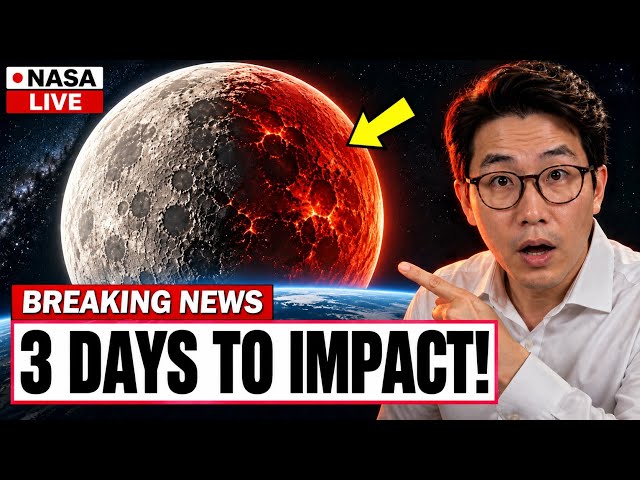
Atmospheric scattering may give it a deep yellow, orange or reddish color while it is low in the sky, and the well-known “Moon illusion” can make it look enormous beside buildings, trees or mountains. Neither effect means that the lunar surface is heating up, expanding or moving dangerously close to Earth. The color is produced because moonlight travels through more of Earth’s atmosphere near the horizon, while the apparent size is a psychological effect created by surrounding visual references. The full Moon may also influence higher-than-average tides when its gravity combines with that of the Sun, but ordinary spring tides are predictable and do not signal a global catastrophe. In 2026, the lunar calendar includes 13 full moons, rather than the more familiar 12, yet this too is a natural consequence of the approximately 29.5-day lunar cycle not fitting evenly inside a calendar year. The extra full Moon is sometimes popularly called a Blue Moon, although definitions differ depending on whether the term is applied seasonally or by calendar month. Astronomers also warn viewers to be skeptical of digitally altered thumbnails portraying the Moon as cracked, burning, changing color permanently or approaching Earth.
No credible observatory has predicted that such a transformation will begin next week. The genuine event requires no special safety equipment and can be seen without a telescope from any location where the Moon is above the horizon and clouds do not interfere. Binoculars may reveal bright rays around major craters, while a small telescope can show maria, mountain ranges and the rough boundary between light and darkness before and after the exact full phase. Far from being an event unseen by anyone alive, the Harvest Moon is a recurring celestial tradition—but its brilliant rise remains one of the year’s most impressive reminders that familiar astronomical cycles can still produce extraordinary sights.


