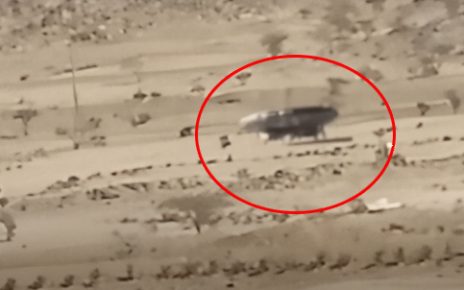
The Manises UFO Incident (1979) Spain’s Most Famous UFO Encounter
On November 11, 1979, a commercial passenger flight (TAE Flight JK-297) was flying from Salzburg, Austria, to Las Palmas, Spain, with 109 passengers on board. While passing near Ibiza, the flight crew reported seeing several bright red lights rapidly approaching the aircraft.

Captain Francisco Javier Lerdo de Tejada believed the mysterious lights were on a collision course. He changed altitude several times, but according to the crew, the lights appeared to follow the aircraft’s movements. Concerned for the safety of everyone on board, the captain declared an emergency and diverted the flight to Manises Airport near Valencia, making what is often described as the first emergency landing by a commercial airliner due to an unidentified aerial phenomenon.
After the aircraft landed safely, the Spanish Air Force scrambled a Mirage F1 fighter jet to investigate. The fighter pilot reported chasing a bright object that repeatedly accelerated away whenever he got close. The pursuit lasted for more than an hour before the pilot had to return because of low fuel. Some reports also claimed unusual radar contacts were detected during the incident.
The case attracted nationwide attention in Spain and was later investigated by military authorities. When official files were declassified, investigators suggested that the lights may have been caused by a combination of distant industrial lights, bright stars or planets, and atmospheric conditions. However, the flight crew and fighter pilot disagreed with that explanation, maintaining that what they experienced could not be fully explained by those factors.
Today, the Manises UFO Incident remains one of Europe’s best-known UFO cases. While no definitive evidence has confirmed an extraterrestrial origin, the combination of pilot testimony, military involvement, and radar reports continues to make it a fascinating subject for UFO researchers and aviation historians alike