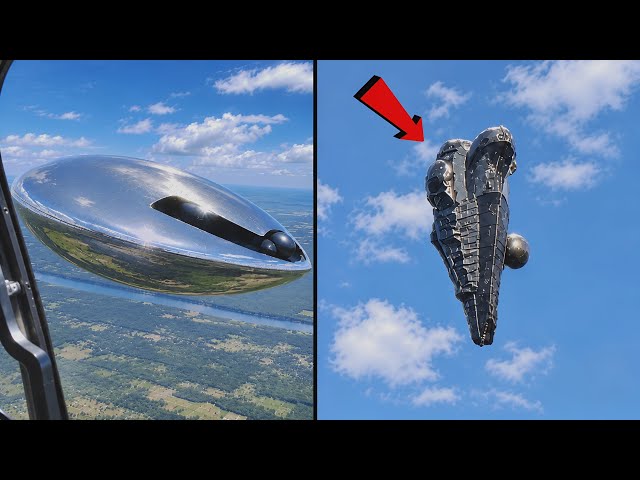
RAW UFO Sightings 2026: New and Unseen Footage Gets Crazier, and the Debate Gets Louder
A fresh wave of unedited, so-called “raw” footage claiming to show unidentified flying objects is spreading across video platforms and social media in 2026. It is drawing millions of views and reigniting a debate that has followed humanity for generations: are we being visited, or are we simply getting better at filming things we cannot explain?
The clips vary widely. Some show glowing orbs drifting silently above city skylines at dusk. Others capture dark, triangular shapes hovering over rural highways, or bright lights that appear to stop, hang motionless, and then accelerate out of frame. Many are labeled “unseen” or “never before released,” a phrase that has become almost standard in the genre. Viewers in the comment sections describe the latest material as “crazier” than anything posted in previous years, and the word has become a fixture of video titles.
Why the footage feels different this year
Part of the surge comes down to technology. Smartphones now carry high-resolution cameras with powerful zoom and low-light capability, which means ordinary people can record the night sky with a level of detail that was impossible a decade ago. Dashcams, doorbell cameras, drone cameras, and home security systems also run around the clock, creating a vast and growing archive of random sky footage. When even a small fraction of that footage contains something odd, the sheer volume produces a steady stream of intriguing clips.
Public attitudes have shifted as well. Over the past several years, governments and official bodies in several countries have discussed unidentified aerial phenomena, often shortened to UAP, in a far more open and serious tone than in the past. Hearings, reports, and public statements have made the subject feel less like a fringe obsession and more like a legitimate topic of inquiry. That change in tone has encouraged more witnesses to come forward and more creators to share what they have recorded.
What experts usually say
Despite the excitement, researchers and sky-watching professionals urge caution. In many cases, they note, the explanation turns out to be mundane. Aircraft lights viewed at an unusual angle, commercial drones, weather balloons, satellites, and the growing number of satellite constellations in low Earth orbit can all produce strange visuals, especially when filmed through a phone camera. Lens flares, reflections on glass, insects passing close to the lens, and compression artifacts in uploaded video can also create shapes and movements that seem inexplicable at first glance.
Another factor is the rapid rise of AI-generated and digitally edited video. Tools that can create convincing footage from a text prompt have become widely accessible, and distinguishing a real recording from a fabricated one is now harder than ever. Analysts who study viral media advise viewers to look for the original uploader, check whether the clip appears with consistent details across multiple sources, and be wary of videos that lack location, date, or camera information. A clip labeled “raw” is not necessarily authentic, since the term is a marketing label rather than a guarantee.
The appeal of the unexplained
Even so, the fascination remains strong. Part of the appeal is the thrill of mystery: a few seconds of shaky footage can feel like a window into something far larger than everyday life. For others, the interest is more reflective. In an era when much of the world seems mapped, measured, and explained, the idea that something in the sky might defy easy classification carries a certain wonder.
Content creators have noticed this appetite. Channels dedicated to compiling sightings often publish weekly roundups, pairing viewer submissions with dramatic music, slow-motion replays, and speculative commentary. Some produce careful analysis that walks through possible explanations. Others lean heavily on suspense, using bold titles and cliffhanger edits to keep audiences watching. The difference in quality is considerable, and viewers are advised to treat sensational headlines with healthy skepticism.
What happens next
Whether any of the 2026 clips will withstand serious scientific scrutiny is an open question. Genuine investigation requires more than a single video: it calls for corroborating witnesses, sensor data, radar records, and the ability to examine the original, unaltered file. Few viral clips come with that kind of supporting evidence, which is why most remain in the category of curiosities rather than proof.
Still, the trend shows no sign of slowing. As cameras improve, as more people look up, and as institutions continue to discuss the subject more openly, the volume of reported sightings is likely to keep rising. Each new upload invites the same questions, and each answer, whether it points to a drone, a balloon, a trick of the lens, or something genuinely unknown, adds another chapter to a story that is far from finished.
For now, the best advice from careful observers is simple: stay curious, stay critical, and look closely before you share. The sky has always held surprises, and in 2026 more people than ever are watching it, phone in hand, waiting to see what appears next.
Bạn muốn mình điều chỉnh độ dài, giọng văn (nghiêm túc hơn hoặc giật gân hơn) hay thêm chi tiết từ hình ảnh không?