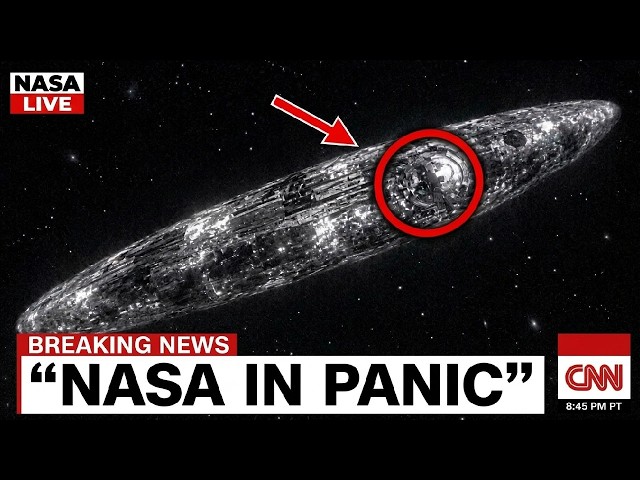
1 MINUTE AGO: First Ever Images from the Vera Rubin Telescope JUST SHOCKED the JAMES WEBB!
BREAKING SPACE NEWS — A revolutionary new era of astronomical discovery is underway as the Vera C. Rubin Observatory begins revealing extraordinary details of the universe! Equipped with the largest digital camera ever constructed, this powerful observatory is designed to capture enormous sections of the night sky with incredible speed and precision. Its first public images have already revealed millions of distant galaxies, countless stars, and thousands of asteroids, raising an exciting question: What could astronomers discover next?

Located high in the Chilean Andes, the Vera Rubin Observatory was built to accomplish something extraordinary: repeatedly photograph the southern night sky and detect even the smallest changes occurring across the universe. Unlike traditional telescopes that concentrate on individual targets, Rubin is designed to observe enormous areas of space over and over again, creating a detailed time-lapse record of the changing cosmos.
When its first major public images were released on June 23, 2025, the results immediately attracted worldwide attention. During just over ten hours of test observations, the observatory captured millions of galaxies and Milky Way stars, along with thousands of asteroids. One spectacular visualization combined more than 1,100 images to reveal approximately ten million galaxies in a single extraordinary view.
But the discoveries did not stop there.
Among the first images were breathtaking views of the Trifid and Lagoon Nebulae, enormous clouds of gas and dust where stars are born. The observatory also demonstrated its ability to identify moving objects and detect previously unknown asteroids. These early results provided an exciting preview of what could become one of the most important astronomical surveys in history.
So, what does this mean for NASA’s James Webb Space Telescope?
The two observatories are not competitors. They are designed to investigate different aspects of the universe and can work together to answer some of astronomy’s biggest questions. Rubin specializes in repeatedly surveying enormous areas of the sky, discovering objects and detecting changes. James Webb, meanwhile, uses highly sensitive infrared instruments to investigate selected targets in extraordinary detail, studying distant galaxies, star formation, and the chemical composition of planetary atmospheres.
Imagine Rubin discovering a mysterious object moving through the Solar System. Astronomers could then direct Webb or other specialized observatories toward it for a closer investigation. This combination could help researchers discover unusual asteroids, distant comets, exploding stars, and even interstellar visitors similar to 3I/ATLAS.
Rubin’s ten-year Legacy Survey of Space and Time is expected to transform our understanding of dark matter, dark energy, galaxy evolution, and the structure of the universe. Its enormous collection of observations could reveal billions of astronomical objects and millions of previously unknown changes in the night sky.
The most exciting possibility is that Rubin may discover phenomena that scientists have never encountered before. Some objects could challenge existing theories, while others might provide missing clues about how the universe evolved.
However, the headline’s suggestion that Rubin’s images have shocked James Webb is dramatic storytelling rather than a confirmed scientific event. There is no official announcement that NASA’s Webb telescope has been shocked or challenged by Rubin’s discoveries.
Could the Vera Rubin Observatory discover something that even the world’s most powerful space telescopes have never seen? What fascinates you more: mysterious distant galaxies, unknown objects in our Solar System, or the secrets of dark matter? Share your thoughts below!
Official sources:
-
NASA — James Webb Space Telescope Discoveries.
NSF – U.S. National Science Foundation+3