NASA’s Psyche Spacecraft Detected Something Strange — What Lies Inside the Metal Asteroid?

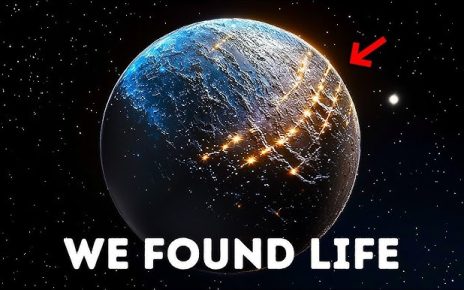
A mysterious asteroid traveling through the depths of our solar system has become the focus of one of NASA’s most ambitious planetary exploration missions. Known as 16 Psyche, this extraordinary celestial object may contain enormous quantities of metal, potentially offering scientists an unprecedented opportunity to investigate the hidden building blocks of planets. Dramatic images circulating online depict a massive metallic asteroid with glowing golden material concealed beneath its fractured surface, raising an intriguing question: could NASA’s Psyche spacecraft uncover something unlike anything humanity has encountered before?
Located within the main asteroid belt between Mars and Jupiter, Psyche is approximately 226 kilometers across at its widest extent. Unlike many familiar asteroids composed primarily of rocky material, Psyche has long attracted scientific attention because observations suggest that metal may account for a substantial portion of its composition.
Scientists believe the asteroid could contain significant quantities of iron and nickel, materials commonly associated with the metallic cores of terrestrial planets.
One intriguing hypothesis suggests that Psyche might represent part of the exposed interior of an ancient planetary building block that experienced violent collisions billions of years ago.
If this interpretation proves correct, studying Psyche could provide scientists with an extraordinary opportunity to investigate processes that normally remain hidden thousands of kilometers beneath planetary surfaces.
NASA launched the Psyche spacecraft on October 13, 2023, aboard a SpaceX Falcon Heavy rocket from Kennedy Space Center in Florida.
The mission is designed to investigate the asteroid’s composition, geological characteristics, magnetic properties, and internal structure.
Its planned arrival at Psyche is in 2029, meaning the spacecraft has not yet conducted close-range scientific observations of the asteroid itself.
This distinction is particularly important when evaluating sensational claims that NASA has already discovered mysterious glowing chambers or extraordinary structures inside Psyche.
There is currently no confirmed evidence that the asteroid contains glowing golden cavities, artificial structures, or an unknown energy source.
The dramatic image accompanying this story should be understood as an imaginative illustration rather than an authenticated photograph from the spacecraft.
Nevertheless, the actual scientific mission is remarkable.
The spacecraft carries a multispectral imager designed to examine the asteroid’s surface, along with instruments capable of investigating its elemental composition and magnetic environment.
A gamma-ray and neutron spectrometer will help scientists determine which elements are present near the surface, while a magnetometer will search for evidence of magnetic fields.
Such measurements could reveal clues about whether Psyche once belonged to a larger body that possessed a molten metallic core.
The spacecraft will also use radio tracking to investigate the asteroid’s gravitational field, helping researchers infer how mass is distributed within its interior.
One of the mission’s most fascinating questions concerns Psyche’s unusual formation history.
Was it once the metallic heart of a destroyed protoplanet, or did it develop through processes that scientists have not yet fully understood?
Some researchers have suggested that Psyche could be a complicated mixture of metal and silicate rock rather than a completely exposed planetary core.
Determining which explanation is correct could reshape scientific understanding of how rocky planets formed during the earliest stages of the solar system.
The asteroid’s metallic nature has also inspired speculation about its potential economic value.
However, claims that Psyche contains unimaginable quantities of accessible gold or other precious metals remain speculative. Its actual composition is not yet sufficiently understood to support such conclusions, and transporting asteroid materials to Earth would present enormous technological and economic challenges.
The mission’s importance lies primarily in scientific discovery rather than space mining.
Psyche could preserve evidence of violent collisions, planetary differentiation, and the transformation of early solar system materials.
Every measurement may help researchers reconstruct events that occurred more than four billion years ago.
Meanwhile, NASA’s spacecraft is also demonstrating advanced solar-electric propulsion technology, using electricity generated by solar arrays to accelerate xenon ions and gradually change its trajectory through space.
Ultimately, the greatest mystery surrounding Psyche is not whether it contains a hidden alien machine or a glowing treasure chamber, but how such an unusual metallic world came into existence.
If the asteroid truly preserves material from the interior of an ancient planetary body, its exploration could provide insights into the formation of Earth and other rocky planets.
What scientists discover when the spacecraft reaches Psyche may challenge existing theories about planetary evolution.
And the most extraordinary possibility is that this distant asteroid could reveal secrets about the deep interiors of worlds that humanity may never be able to explore directly.
What do you think? Could Psyche be the exposed metallic core of a destroyed ancient planet, or might its unusual composition reveal an entirely different formation process? If NASA discovers unexpected structures beneath its surface, what do you think scientists will find? Share your theories in the comments!