I Was Never Afraid of UFOs or Aliens Until I Learned About This | Joe Rogan

For decades, unidentified flying objects have fascinated humanity, inspiring countless theories about extraterrestrial civilizations, advanced technology, and mysterious encounters in the skies. But a far more unsettling possibility has emerged in discussions surrounding UFOs and the Joe Rogan Experience: what if the most frightening aspect of alien intelligence is not whether it exists, but how little humanity understands about what an encounter could mean? From unexplained military sightings to allegations of secret government programs, the growing debate surrounding Unidentified Anomalous Phenomena, or UAP, has raised questions that extend far beyond traditional science fiction.
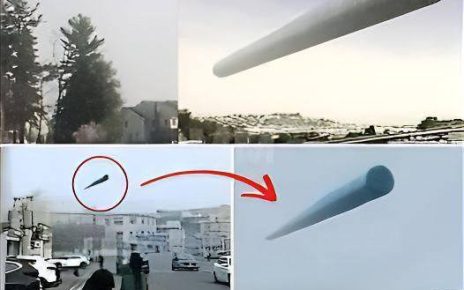
One of the most widely discussed cases remains the 2004 USS Nimitz encounter, when U.S. Navy pilots reported observing an unusual white object apparently maneuvering without conventional wings or visible propulsion. Military personnel described movements they found difficult to explain, while radar systems reportedly detected unusual activity.
Years later, the Pentagon officially released several Navy infrared recordings, including videos known as “FLIR1,” “Gimbal,” and “GoFast.” These recordings intensified public interest because they were authentic military footage rather than anonymous internet videos.
However, their authenticity does not establish that the objects were extraterrestrial spacecraft. Scientists emphasize that viewing angles, sensor limitations, atmospheric conditions, and incomplete information can create misleading impressions of an object’s speed, size, and behavior.
The controversy became even more extraordinary when former intelligence officials began alleging that classified government programs had recovered unidentified craft and biological material described as “non-human.”
Former intelligence official David Grusch brought some of these allegations before Congress in 2023, prompting renewed demands for transparency. Nevertheless, no publicly available spacecraft or biological specimen has been independently verified as extraterrestrial.
But perhaps the most disturbing possibility comes from a scientific question rather than a government allegation.
If an extraterrestrial civilization were capable of traveling between stars, its technology could be thousands—or even millions—of years more advanced than humanity’s.
Such a civilization might possess scientific knowledge far beyond our current understanding, potentially making its intentions, communication methods, and technological capabilities extraordinarily difficult to interpret.
This possibility connects to the famous Fermi Paradox, which asks why humanity has not detected convincing evidence of extraterrestrial civilizations despite the enormous number of stars and planets throughout the galaxy.
Some researchers have proposed that intelligent life may be exceptionally rare. Others suggest technological civilizations could be short-lived or that interstellar communication is much more difficult than commonly imagined.
A more disturbing speculative explanation is the Dark Forest hypothesis, popularized by science-fiction author Liu Cixin. It imagines that advanced civilizations might deliberately conceal their existence because revealing their location could expose them to potentially hostile societies.
Under this scenario, the silence of the universe would not necessarily indicate an absence of intelligent life. Instead, it might reflect a strategy of survival.
However, there is no scientific evidence that extraterrestrial civilizations are hiding from one another or that Earth is being secretly monitored.
Another unsettling idea involves the possibility that an advanced intelligence might not communicate through recognizable radio signals or physical spacecraft. Its technology could theoretically operate in ways that humans would struggle to identify, although such possibilities remain speculative.
NASA and other scientific organizations continue investigating unusual observations while emphasizing the importance of reliable data, reproducible measurements, and independent verification.
Meanwhile, powerful telescopes are examining distant planetary atmospheres for chemical signatures that could eventually provide evidence of biological activity.
The truly frightening possibility is not that aliens have already been proven to be visiting Earth—they haven’t—but that humanity may be only beginning to understand how vast, ancient, and potentially unfamiliar intelligent life elsewhere in the universe could be. If another civilization exists far beyond our technological capabilities, the greatest challenge may not be finding it, but understanding what its existence means for our future.