China’s New 3I/ATLAS Discovery Just Made the Impossible POSSIBLE!

A new wave of attention surrounding the mysterious interstellar comet 3I/ATLAS has intensified after observations from China provided another remarkable view of only the third confirmed object known to have entered our Solar System from interstellar space. China’s Tianwen-1 spacecraft, currently operating around Mars, successfully observed 3I/ATLAS in October 2025 as the comet passed roughly 30 million kilometers from the spacecraft.
According to the China National Space Administration, Tianwen-1’s high-resolution camera captured the object and its surrounding coma, demonstrating that a spacecraft designed primarily to study Mars could also perform observations of a fast-moving interstellar visitor.
The achievement immediately attracted attention because 3I/ATLAS is unlike an ordinary Solar System comet in one fundamental respect: its trajectory shows that it originated beyond the gravitational domain of the Sun.
Traveling along a hyperbolic path, the object entered our planetary neighborhood only temporarily and will eventually return permanently to interstellar space. Astronomers therefore have a limited opportunity to study material that formed around another star, potentially billions of years before reaching us.
Observations by NASA’s James Webb Space Telescope and other facilities have revealed unusual chemistry, including a coma exceptionally rich in carbon dioxide compared with water. Researchers have also detected water, carbon monoxide, methane and other molecules, allowing scientists to reconstruct some of the conditions under which this distant object may have formed.
China’s observations are important because viewing the comet from the vicinity of Mars provides a different observational geometry than telescopes near Earth. Combining measurements from spacecraft and observatories at different locations can help astronomers refine 3I/ATLAS’s trajectory, activity and physical characteristics.
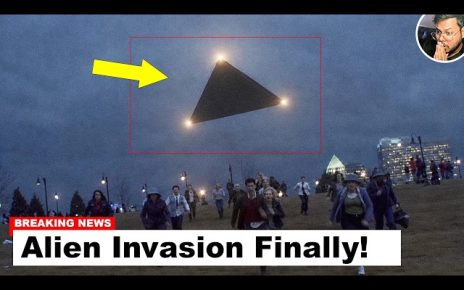
Yet the spectacular object shown in the accompanying image—appearing almost like a metallic structure embedded inside a burning comet—should not be interpreted as an authentic close-up photograph from Tianwen-1. There is currently no confirmed evidence that Chinese scientists have discovered a spacecraft, artificial shell or technological object hidden inside 3I/ATLAS.
The actual observations show a distant cometary body surrounded by material released as solar heating causes volatile substances to escape from its surface. This process creates the coma and tail that can make a comet appear dramatically different as it approaches and then moves away from the Sun.
NASA has likewise stated that observations of 3I/ATLAS are consistent with cometary activity and that the object presents no impact threat to Earth. What makes the discovery extraordinary is therefore not an alien structure but the possibility of conducting something close to interstellar archaeology.
Every molecule detected around 3I/ATLAS is potentially a preserved sample of chemistry from another planetary system. By comparing its composition with comets such as those found in our own Solar System, researchers can investigate whether planetary systems elsewhere are built from similar ingredients or under radically different conditions.
China’s successful observation also demonstrates an intriguing future possibility: spacecraft already stationed around planets could potentially become an improvised network for tracking rare interstellar visitors.
If another object enters the Solar System along a favorable trajectory, probes near Mars, Jupiter or elsewhere might provide observations impossible from Earth alone. So while the headline’s suggestion that China has “made the impossible possible” is intentionally dramatic, the underlying achievement is genuinely significant.
Humanity is beginning to observe objects born around other stars from multiple locations across our own planetary system—turning brief interstellar visitors into laboratories for understanding worlds we may never otherwise reach.