Voyager 2 Just Sent This Transmission—and “Warned” the World

A faint radio transmission from NASA’s Voyager 2 has once again crossed billions of kilometers of space, but contrary to alarming claims online, the spacecraft has not broadcast a warning that extraterrestrial visitors are approaching Earth. Launched in 1977, Voyager 2 is now operating beyond the heliopause, the boundary where the solar wind gives way to the interstellar medium.
It crossed that frontier on November 5, 2018, becoming only the second human-made object—after Voyager 1—to enter interstellar space. Its transmissions contain streams of engineering and scientific measurements rather than photographs, spoken messages, or decoded alien signals.
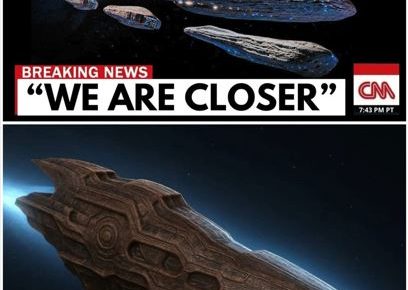
Voyager 2’s imaging cameras were switched off after its historic Neptune flyby in 1989, so the enormous illuminated spacecraft shown in the accompanying thumbnail is a digital illustration, not an image captured by the probe.
What Voyager 2 actually sends home is arguably more valuable: direct measurements of magnetic fields, plasma waves, and energetic particles in a region no functioning spacecraft had explored before the Voyager missions.
Those measurements revealed that the plasma outside the heliosphere is considerably denser and colder than the solar plasma found inside it, while changes in cosmic rays and charged particles helped scientists define the heliopause as a complex, dynamic boundary rather than a simple wall.
As of 2026, Voyager 2 remains an active extended mission, although dwindling electrical power has forced NASA to shut down some instruments. Its magnetometer, cosmic-ray detector, and plasma-wave instrument continue operating, while the Plasma Science instrument and Low-Energy Charged Particle instrument have been turned off to conserve energy.
Every command and response requires extraordinary patience: NASA’s Deep Space Network must aim its giant antennas precisely at a radio source whose signal is billions of times weaker than an ordinary mobile-phone transmission. Engineers also manage computers built with 1970s technology, limited onboard memory, aging components, and no possibility of physical repair.
Communication failures can therefore sound ominous, but they are normally caused by technical issues rather than interference from unknown objects. In 2023, an incorrect command temporarily pointed Voyager 2’s antenna away from Earth, interrupting contact until controllers restored the link.
The spacecraft carries the Golden Record, a collection of sounds, images, music, and greetings intended to represent Earth if the probe is ever encountered, but it is not currently exchanging messages with another civilization.
The real warning contained in Voyager 2’s data is scientific rather than extraterrestrial: beyond the Sun’s protective magnetic bubble lies an environment filled with energetic cosmic radiation, turbulent plasma, and magnetic disturbances that future interstellar explorers will have to survive.
Voyager 2 is helping researchers understand that environment one increasingly fragile transmission at a time. Eventually, its power will fall below the level required to operate its instruments or radio system, and Earth will receive its final signal.
Until then, each transmission is not evidence that “they are coming,” but proof that a spacecraft built nearly half a century ago is still reporting from the space between the stars.