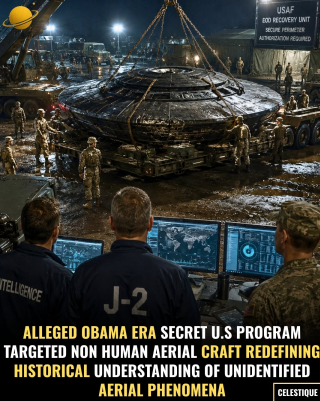
During the Obama administration, multiple sources claim that the United States conducted highly classified operations focused on intercepting and physically recovering unidentified aerial phenomena (UAPs) believed to be of non human origin. Allegedly codenamed “Golden Domes,” this program represents a level of governmental secrecy that, if true, would redefine historical understanding of UAP interactions with military and intelligence communities.
Historically, governments have investigated anomalous aerial objects through both observation and direct intervention. From mid-20th century programs like Project Blue Book to modern initiatives such as the Pentagon’s UAP Task Force, official operations aimed to identify, categorize, and understand phenomena that challenge conventional physics. The alleged Obama era program appears to mark a significant escalation, potentially including the physical recovery of UAPs for study.
The significance of such an operation extends beyond national security. Recovering a non human craft implies access to technologies that surpass current human engineering, such as advanced propulsion, energy systems, or materials science. Understanding these capabilities could revolutionize aerospace design, defense systems, and scientific research while raising complex ethical and strategic questions regarding secrecy and control.
Culturally, these allegations underscore enduring public fascination with extraterrestrial phenomena. They highlight the intersection of curiosity, policy, and speculation, drawing attention to how secrecy, national defense, and unexplained technology shape narratives about the unknown. Whether factual or speculative, the story illustrates how advanced unexplained phenomena can influence governance and societal perception.
Ultimately, if the alleged operations occurred, they would reshape discussions around government transparency, military preparedness, and humanity’s understanding of its place in the universe. The narrative prompts reflection on the ethical responsibility of handling advanced discoveries, the potential societal impact of disclosure, and the broader implications for science, security, and global policy