What if one of the most closely guarded secrets in human history isn’t about technology or warfare-but about us?
What if the story of human origins, and even religion itself, has been shaped by something far beyond what we’ve been told?

That unsettling possibility is exactly what has resurfaced after controversial figure Bob Lazar once again ignited debate with claims that sound like science fiction-but refuse to disappear.
His statements hint at a classified document so explosive, it could fundamentally challenge how we understand humanity, faith, and our place in the universe.
For decades, Bob Lazar has been at the center of some of the most debated discussions surrounding hidden government programs and alleged extraterrestrial technology.
While his earlier claims focused heavily on advanced propulsion systems and secret facilities, this latest narrative shifts into even more sensitive territory. the origins of human life and the foundations of religion.

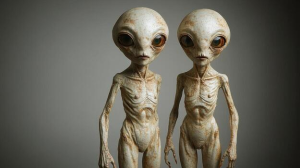
According to Lazar, there may exist a classified document that allegedly contains information suggesting humanity’s development was influenced or even engineered by unknown forces.
Among the most controversial aspects of this claim is the idea that key figures in religious history, including Jesus Christ, may have been connected to genetic manipulation or advanced intervention beyond human capability.
It is important to emphasize that these claims are highly speculative and not
supported by verified scientific, historical, or religious evidence.
No credible institution, academic body, or official documentation has confirmed such
theories.
Still, the nature of the claim alone has been enough to capture widespread attention.
The reason stories like this gain traction is not just because they are shocking-but because they sit at the intersection of science, belief, and mystery.
Questions about where we come from have always been central to human curiosity. When those questions are combined with the idea of hidden knowledge, the result is a narrative that is difficult for many to ignore.
In mainstream science, the origins of humanity are explained through the theory of evolution, supported by extensive fossil records, genetic studies, and decades of research.
Similarly, religious traditions offer spiritual interpretations of human existence that are deeply meaningful to billions of people around the world.
Lazar’s claims exist outside both of these frameworks
They suggest a third possibility-one that implies there may be undisclosed information that has never been shared with the public.

According to supporters of this idea, such information could be withheld due to its potentially destabilizing impact on society.
After all, if a document existed that fundamentally contradicted established scientific understanding or religious belief systems, its release could trigger widespread confusion, debate, and even conflict.
This possibility is often cited as a reason why governments might choose secrecy over transparency.
However, skeptics argue that there is no credible evidence to support the existence of such a document.
They point out that extraordinary claims require extraordinary proof-and in this case, no verifiable data has been presented.
Experts in both science and theology generally dismiss these ideas as speculative at best, emphasizing that current knowledge about genetics and human evolution does not support the possibility of engineered origins in the way described.
Despite this, the story continues to circulate.
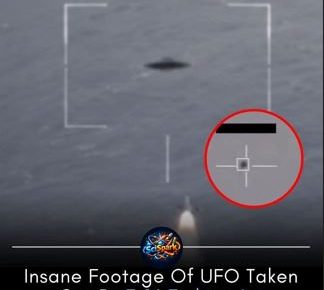
Part of its persistence can be attributed to the enduring fascination with UFOS, extraterrestrial life, and the unknown.
Over the past few years, increased government acknowledgment of unidentified aerial phenomena has added a layer of credibility to discussions that were once considered fringe
This shift has created an environment where more people are willing to entertain unconventional ideas even those that challenge deeply held beliefs.
At the same time, the digital age has made it easier than ever for such narratives to
spread rapidly.
Social media platforms amplify dramatic claims, often without the context needed to evaluate them critically.
As a result, stories like Lazar’s can quickly gain momentum, reaching audiences around the world within hours.
So why do these claims matter?
Not necessarily because they are proven-but because they reflect something deeper about human nature.
They reveal our desire to question, to explore, and to seek answers beyond the limits of current knowledge.
Bromine Barium
They also highlight the importance of critical thinking.
In a world where information–both accurate and misleading-travels at incredible speed, the ability to evaluate claims based on evidence is more important than ever.
The idea that humanity’s origins could be tied to hidden forces or unknown technologies is undeniably compelling.
It challenges our assumptions and invites us to imagine possibilities beyond our current understanding
But until credible evidence emerges, these ideas remain in the realm of speculation.
Still, one question continues to linger.
If there were a truth so profound that it could change everything we believe about ourselves… would we even be ready to hear it?
For now, that answer remains as mysterious as the claims themselves.