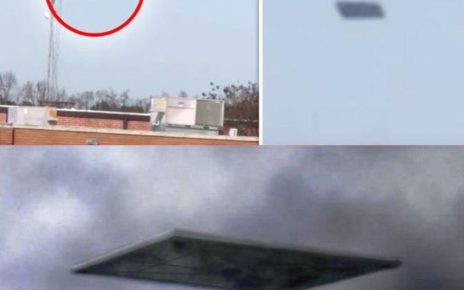
3I/ATLAS: The Interstellar Enigma Defying Cosmic Rules
In a stunning revelation that has captivated the astronomical community worldwide, 3I/ATLAS — a Manhattan-sized interstellar object — has accelerated through our solar system at a staggering velocity of approximately 170,000 miles per hour. What makes this phenomenon extraordinary is that it has done so without shedding any detectable mass, a behavior that contradicts every known principle governing cometary physics.

Unlike typical comets, which accelerate due to the outgassing of volatile materials that shed mass and create visible tails, 3I/ATLAS has displayed a non-gravitational trajectory without any evidence of such mass loss. This defies the expectation that an object of this size and speed should have lost billions of tons of material, forming a glowing coma and tail detectable by telescopes. Instead, it glides through space, glowing with an unusual blue hue, challenging the very foundations of astrophysical models.

The object’s mass is estimated to be around 33 billion tons, with a diameter of roughly 1.8 kilometers. It entered the solar system on a hyperbolic path, indicating an origin beyond our stellar neighborhood. On October 29th, 3I/ATLAS passed perihelion — its closest approach to the sun — triggering a coordinated global effort to capture every possible measurement.
Nine distinct anomalies have been documented, each supported by rigorous data. First among these is the object’s trajectory. The acceleration it exhibits is significantly stronger than what solar radiation pressure could account for. According to NASA’s Jet Propulsion Laboratory (JPL), the measured acceleration exceeds expected values by more than five standard deviations, a statistical certainty that demands explanation.

Standard comet models predict that to achieve such acceleration, the object would need to lose nearly 20% of its mass through outgassing — roughly 5 billion tons. Yet, no such gas or dust cloud has been detected trailing behind 3I/ATLAS. This absence of a massive coma or tail defies all precedent.
Secondly, the object’s color is strikingly different from typical comets. Most comets tend toward reddish hues due to dust and carbon-rich compounds on their surfaces. In contrast, 3I/ATLAS exhibited a blue spectral shift as it neared the sun — a rare and puzzling signature confirmed by both ground-based and space-based spectrophotometers. This blue peak coincided precisely with perihelion, a moment when an artificial craft might perform a high-speed maneuver, further deepening the mystery.

Third, the object’s brightness surged rapidly and unpredictably, far outpacing what standard cometary outgassing models would predict. Despite this brightening, spectroscopic campaigns failed to detect corresponding increases in gas emission lines typically associated with volatile compounds.
Fourth, a crucial astrometric observation by the Atacama Large Millimeter/submillimeter Array (ALMA) recorded a four arcsecond deviation in the object’s position on October 30th — a displacement far outside the norms of comet behavior. This offset indicated that 3I/ATLAS was tens of thousands of kilometers away from where gravitational models predicted it should be, forcing scientists to urgently revise its orbit.
Fifth, despite enduring intense solar forces at perihelion, 3I/ATLAS remained structurally intact, showing no signs of fragmentation or debris commonly observed in stressed comets. Sixth, spectroscopic surveys detected no emission lines from typical volatiles such as cyanogen (CN), C2, or water vapor, which are usually abundant in cometary comas.
Seventh, the object’s luminosity fluctuated irregularly, defying simple explanations like rotation or tumbling. Eighth, its hyperbolic excess velocity surpasses that of previous interstellar visitors such as ‘Oumuamua and Borisov, setting a new benchmark for speed.
Ninth and perhaps most compelling, the sheer number of statistically significant anomalies combined into a single object is unprecedented. Each anomaly is a robust data point, not mere speculation.
The scientific debate now centers on a critical testable prediction. If 3I/ATLAS’s acceleration is due to natural cometary outgassing, then the conservation of momentum demands that it must eject nearly 20% of its mass as gas and dust. Such a massive outflow would produce a sprawling coma visible across multiple wavelengths — ultraviolet, infrared, and radio — easily detected by spectrometers and telescopes worldwide.
Yet, repeated observations have failed to find any such evidence. The absence of a 5 billion-ton gas cloud challenges the natural explanation and places the hypothesis under intense scrutiny. The object has essentially become an experiment unto itself: either a massive coma will appear soon, or the case for an unknown, possibly non-natural acceleration mechanism will gain unprecedented credibility.
During the critical perihelion period, a network of solar observatories — including STEREO, SOHO, and GO satellites — coordinated efforts to monitor 3I/ATLAS continuously. These spacecraft, designed primarily for solar weather monitoring, provided overlapping coverage to minimize data gaps, ensuring that no key moments were missed despite the object’s close solar conjunction.
However, the situation grew more intriguing when the Mars Reconnaissance Orbiter (MRO) captured high-resolution images near the object’s closest approach to Mars on October 2nd and 3rd. These images have yet to be publicly released, prompting congressional inquiries and raising concerns about transparency. NASA cited calibration issues and low signal-to-noise ratios as reasons for the delay, but internal discussions revealed tensions over the risks of premature data release fueling speculation versus the scientific imperative for openness.
This controversy has expanded the debate beyond astrophysics to the realm of scientific transparency and public trust. Independent verification by professional astronomers and skilled amateurs alike is crucial for interpreting this unprecedented event.
Meanwhile, the European Space Agency’s Juice mission faces a pivotal decision: whether to divert its carefully planned trajectory to capture imaging of 3I/ATLAS during a narrow November window or to prioritize its primary mission objectives around Jupiter’s icy moons. The decision weighs the potential scientific payoff of studying this mysterious visitor against the operational risks and resource constraints.
As December approaches, ground-based observatories worldwide, including KECK, VLT, Gemini, and numerous amateur astronomers, have reserved their clearest nights to track 3I/ATLAS as it emerges from the sun’s glare. A coordinated campaign aims to maximize sky coverage and data sharing, with radar facilities on standby to conduct echo experiments that could reveal the object’s shape, spin, and surface characteristics.
The stakes could not be higher. If the expected gas cloud or emission lines fail to materialize, the evidence for non-natural acceleration strengthens, potentially rewriting textbooks on interstellar objects. Conversely, the appearance of a massive coma would reaffirm current cometary models.
For now, 3I/ATLAS stands as a profound enigma — a cosmic visitor that defies explanation and challenges scientists to rethink their assumptions. Its journey through our solar system tests not only the limits of physics but also the principles of scientific openness and collaboration. The coming weeks promise revelations that could reshape our understanding of the universe or deepen the mystery even further.